
Hot Georgia weather can make striper and hybrid fishing in Lake Oconee feel unpredictable. Fish that were easy to locate during cooler months may suddenly disappear from familiar areas, and surface activity can become much shorter.
That does not mean stripers and hybrids stop feeding. Summer mainly changes where they can comfortably spend their time, when they feed, and how anglers need to search for them.
Why Does Hot Weather Change the Bite?
As Lake Oconee warms, temperature and dissolved oxygen can vary considerably by depth. Stripers are especially sensitive to warm water, so they often concentrate where suitable temperature, oxygen, and available forage come together.
Georgia DNR fishing reports have repeatedly documented Lake Oconee stripers and hybrids relating to deeper summer zones, particularly around the dam and areas where oxygen conditions are more favorable.
For a broader view of what anglers can expect across the lake during this season, read What is Summer Fishing in Lake Oconee.
Are They Actually Harder to Catch?
During hot weather, stripers and hybrids may gather in narrower depth ranges instead of being widely scattered. Once you find that productive zone, fishing can improve quickly.
Miss that depth by several feet, however, and the lake may seem surprisingly quiet.
This is one reason current Lake Oconee Fishing Reports are useful. Conditions can change from week to week depending on water temperature, weather, forage movement, and oxygen levels.
Where Should You Look in Summer?
During hot periods, anglers often find stripers and hybrids around river channels, humps, creek mouths, deeper points, and areas closer to the dam.
Electronics can be particularly useful because visible shoreline cover may have little connection to where these open-water fish are holding.
Instead of dropping bait immediately, spend some time locating schools or concentrations of baitfish first.
For a deeper look at how these locations change throughout the year, see Where to Find Striped and Hybrid Bass in Lake Oconee Throughout the Year.
Why Early Morning Can Be So Productive
The period around sunrise can provide more comfortable conditions for both anglers and fish, and feeding activity may occur before intense daytime heat develops.
That does not mean the bite always ends after sunrise, but early morning can give anglers another opportunity to locate active schools before conditions change.
For Striped and Hybrid Bass Trips in Lake Oconee, an early departure can also mean less recreational boat traffic and a more comfortable day on the water.
If you are still deciding which month to book, What Month is Best for Striper Fishing on Lake Oconee? provides useful seasonal context.
Do Stripers Always Move to the Deepest Water?
Fish may move deeper, but they do not automatically settle on the bottom. They often suspend at the depth where food, temperature, and oxygen conditions are most suitable.
That depth can change during the summer, which is why watching sonar is often more useful than deciding in advance that the fish “must be deep.”
A school suspended at 25 or 30 feet over much deeper water needs a very different presentation from fish sitting close to the bottom.
What Presentations Work in Hot Weather?
The key is keeping your presentation close to the depth where the school is actually holding.
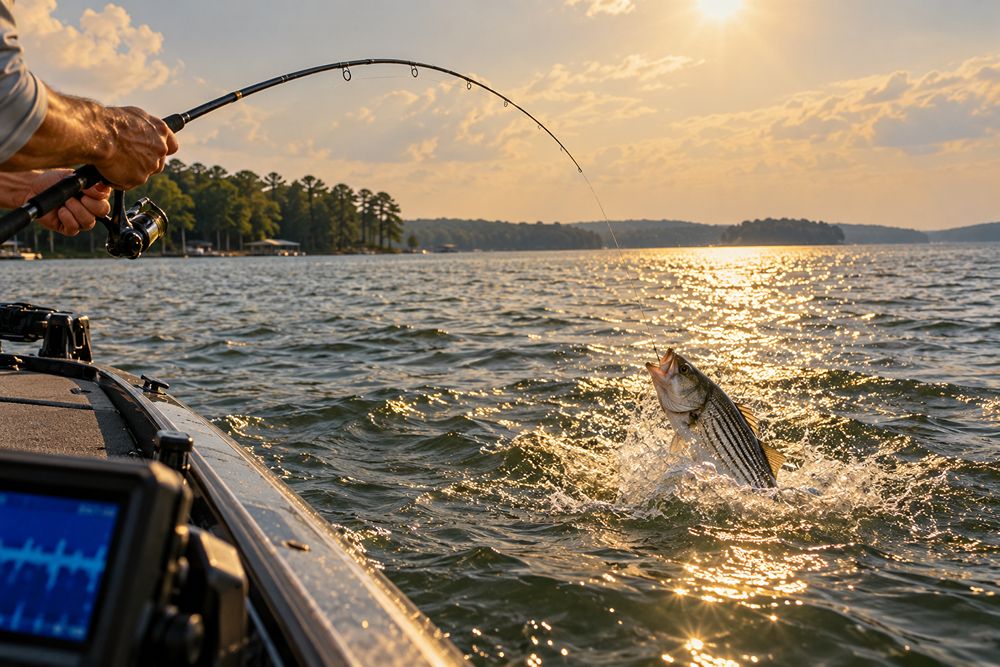
Downlining live bait can help when fish are concentrated beneath the boat, while trolling can cover more water when schools are scattered.
Vertical spoons and similar presentations may also work when fish are holding tightly in deeper water.
A Guided Fishing Trip in Lake Oconee can be particularly useful during summer because productive depths and locations may shift between trips.
What About Fish Stress in Hot Water?
Warmer water generally holds less dissolved oxygen than cooler water, which can increase stress on fish that have been fought for a long time or brought up from deeper water.
Keep handling brief, have pliers and cameras ready before lifting the fish, and return released fish to the water as quickly as practical.
The Georgia Department of Natural Resources provides additional information about Georgia freshwater fisheries and responsible fishing through its official Georgia Wildlife Resources Division guidance.
Can You Still Keep Stripers and Hybrids in Summer?
Under the 2026–27 Georgia Fishing Regulations, striped bass, white bass, and hybrid white-striped bass have a combined daily limit of 15 fish, and only two may be 22 inches or longer on waters such as Lake Oconee.
Georgia also states that once an angler has taken the daily limit for a particular species, it is unlawful to continue fishing for that species. You can review the current official regulations through the Georgia Fishing Regulations guide.
For more detail about keeping these fish specifically, read Can You Keep Hybrid Bass and Stripers from Lake Oconee?
It is also important not to apply Lake Seminole-specific restrictions to Lake Oconee. Georgia regulations treat these waters differently, and the Georgia portion of Lake Seminole has separate rules associated with its border-water status and seasonal restrictions.