
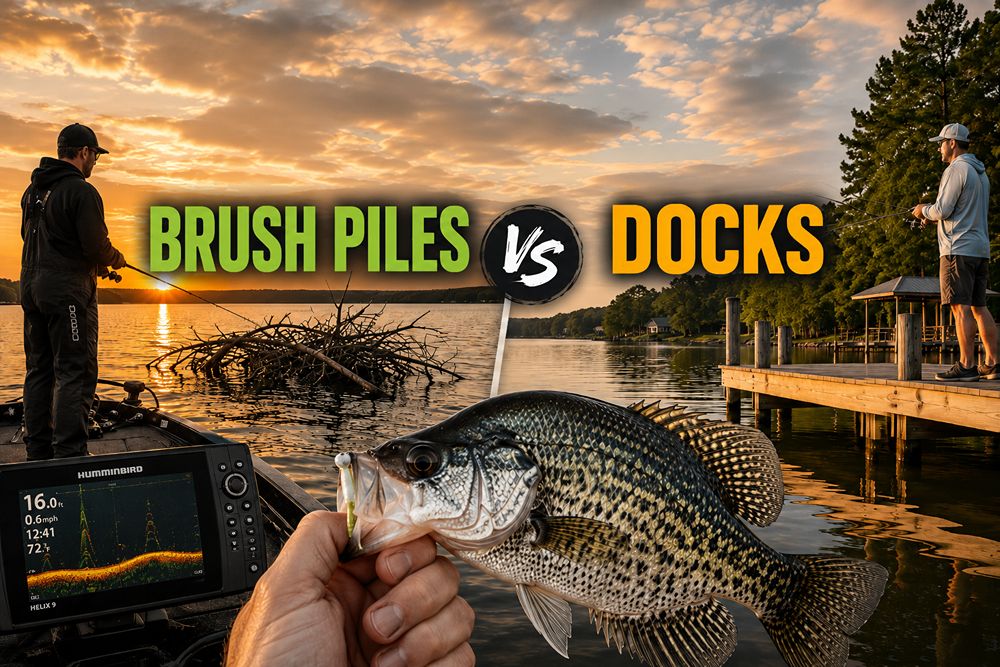
Brush piles or docks? It is one of the most common questions anglers ask when planning Lake Oconee Crappie Fishing.
Both types of cover can hold fish. The better choice depends on the season, water depth, sunlight, fishing pressure, and whether crappie are actively feeding or holding close to cover.
Lake Oconee supports both black and white crappie, giving anglers opportunities across different parts of the lake. To understand why the fishery attracts so much attention, read Why Lake Oconee is the Crappie Fishing Capital of Georgia?
Brush Piles vs. Docks at a Glance
| Fishing situation | Brush piles | Docks |
|---|---|---|
| Best for deeper fish | Often | Sometimes |
| Easy for beginners | Requires accurate positioning | Usually easier to identify |
| Useful during bright conditions | Yes, especially in deeper water | Yes, because docks create shade |
| Risk of snagging | Higher | Moderate |
| Best presentation | Vertical jigging or minnows | Casting, shooting jigs or vertical fishing |
Neither option wins every day. Successful anglers treat brush and docks as two parts of the same fishing plan rather than competing choices.
Why Crappie Gather Around Brush Piles
The challenge is finding the brush and keeping your bait close without getting buried in the branches. Traditional sonar, down imaging, GPS waypoints, or forward-facing sonar can make the process easier.
When fishing brush, place the lure just above the cover. Crappie usually look upward to feed, so dropping directly into the thickest branches may create more snags than bites.
For help matching your presentation to this type of structure, see What Crappie Fishing Techniques Work Best on Lake Oconee?
Why Docks Can Be So Productive
A dock becomes more promising when it has sufficient depth, nearby access to deeper water, and visible shade. An isolated shallow dock may hold little, while a dock near a channel or drop can replenish with fish throughout the day.
Docks are also easier to identify than hidden brush piles. This makes them a sensible starting point for visiting anglers who do not already have productive waypoints.
When Should You Choose Brush?
- Crappie have moved into deeper water.
- Bright sunlight pushes fish toward submerged cover.
- Your electronics show fish holding above or beside wood.
- Productive docks have received heavy fishing pressure.
- You want to work a concentrated school vertically.
Electronics can shorten the search, but they are not essential. Marker buoys, careful boat positioning, and standard sonar have helped anglers fish brush successfully for years.
A useful supporting read is Do You Need Forward-Facing Sonar to Catch Crappie on Lake Oconee? particularly for anglers deciding whether advanced electronics suit their fishing style.
When Should You Choose Docks?
- Crappie are moving toward shallower cover.
- Shade is creating a comfortable holding area.
- Wind makes open-water boat control difficult.
- You want to cast or shoot small jigs into tight spaces.
- You are searching unfamiliar water without saved brush locations.
Do not assume every dock is worth equal time. Make several accurate casts, vary the depth, and move on when the area does not produce signs of fish.
Does the Season Change the Answer?
During spring, some crappie move toward shallower areas and may use docks close to spawning water. After the spawning period, fish often transition toward deeper cover, making offshore brush increasingly important.
Summer commonly favors deeper or shaded locations. Fall can produce fish around both cover types as water temperatures change, while winter crappie may gather around deeper, more stable structure.
These are general patterns rather than fixed rules. Weather, water conditions, current, and recent temperature changes can shift the bite from one location to another.
For a broader month-by-month view, visit Seasonal Fishing Calendar for Lake Oconee: When to Target Each Species.
A Better Strategy: Check Both
Try several docks with different depths and amounts of shade. If the fish are scattered or inactive, move to known brush piles and check multiple depth ranges.
This approach also gives you a backup plan. If recreational traffic disturbs docks, offshore brush may be more comfortable to fish. When wind makes open-water positioning difficult, protected docks may become the easier option.
Common Questions About Lake Oconee Crappie Cover
Can the same dock hold crappie all year?
Should I fish inside the brush pile?
How long should I stay at one location?
What are Georgia’s crappie limits?
Anglers age 16 and older generally need a current Georgia fishing license while fishing Lake Oconee, subject to the exemptions listed in state regulations.
Regulations can change, so review the current Georgia DNR fishing rules before each Lake Oconee Fishing Trip.
Brush or Docks: Which Should You Fish First?
The strongest Crappie Fishing in Lake Oconee plan includes both. Let the season guide your starting point, then allow depth, fish activity, and current conditions to decide where you stay.